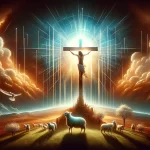

Consubstantiality
Consubstantiality is a theological term that affirms that the persons of the Trinity share the same divine essence or substance. The term expresses the biblical teaching that the Father, the Son, and the Holy Spirit are distinct persons yet fully and equally God. Within Evangelical Protestant theology, consubstantiality safeguards the unity of God while affirming the full deity of Christ and the Holy Spirit. The concept historically emerged from early Trinitarian debates in the fourth century, particularly during the controversies addressed by the Council of Nicaea in AD 325. In that setting the church confessed that the Son is homoousios, meaning “of the same substance,” with the Father. Evangelical theology affirms the doctrinal substance of this confession because it aligns with the teaching of Scripture concerning the divine identity of Christ and the Spirit. The doctrine therefore functions as a theological clarification of biblical revelation rather than a philosophical addition to it. Consubstantiality protects the truth that the one God exists eternally in three persons who share one divine nature. For evangelical theology, the doctrine serves both a doctrinal and redemptive purpose, because the gospel depends upon the true deity of the Son who accomplishes salvation.
Biblical Foundations of Consubstantiality
Evangelical Protestants affirm that the doctrine of consubstantiality arises from the unified testimony of Scripture. The Bible consistently teaches that God is one in essence. Deuteronomy 6:4 declares, “Hear, O Israel: The LORD our God, the LORD is one.” At the same time the New Testament identifies the Son and the Holy Spirit with the same divine nature attributed to the Father. John 1:1 states, “In the beginning was the Word, and the Word was with God, and the Word was God.” This statement affirms both distinction and identity within the Godhead. Similarly, Colossians 2:9 teaches that “in him the whole fullness of deity dwells bodily,” referring to Jesus Christ. The Holy Spirit is likewise described as divine, possessing the attributes and authority of God. In Acts 5:3-4 Peter equates lying to the Holy Spirit with lying to God, indicating the Spirit’s full participation in the divine nature. These passages collectively demonstrate that the Father, Son, and Spirit share the same divine essence while remaining personally distinct.
The unity of the divine nature also appears in passages that speak of the shared works of the Trinity. Creation is attributed to the Father, the Son, and the Spirit. Genesis 1:1 describes God as the Creator, while John 1:3 teaches that all things were made through the Word. The Spirit is also present in creation as the one who hovered over the waters in Genesis 1:2. The same unity appears in redemption. The Father sends the Son, the Son accomplishes salvation through the cross, and the Spirit applies redemption to believers. These unified works demonstrate a shared divine essence and authority among the persons of the Trinity.
Christological Significance
Consubstantiality is essential for a biblical understanding of the person of Christ. Evangelical theology affirms that Jesus Christ is fully God and fully man. His deity is not partial, derived, or secondary. Instead, the Son shares the same divine essence as the Father from eternity. This affirmation protects the biblical witness against views that diminish the divine nature of Christ. Early theological controversies such as Arianism argued that the Son was a created being rather than eternally divine. The doctrine of consubstantiality rejected this claim by affirming that the Son possesses the same divine nature as the Father.
This truth carries direct implications for salvation. Only one who is fully divine can accomplish the work of redemption in a manner sufficient for all humanity. The atoning work of Christ depends upon the infinite worth of his divine nature. Evangelical theologians therefore emphasize that the Savior must be both truly God and truly man. His humanity enables him to represent humanity, while his deity gives his sacrificial work infinite value. The doctrine of consubstantiality preserves this balance and secures the biblical teaching of salvation through Christ alone.
Trinitarian Unity and Distinction
Evangelical theology maintains that consubstantiality must be understood together with the distinction of the divine persons. The Father, Son, and Holy Spirit are not merely different names for the same person. Each person possesses personal identity and relational distinction within the Godhead. The Father sends the Son, the Son obeys the Father, and the Spirit proceeds from the Father and the Son in the work of redemption. These distinctions reveal personal relationships within the Trinity while preserving the unity of the divine essence.
This balanced understanding guards against two opposite errors. One error is tritheism, which divides the Godhead into three separate gods. The other error is modalism, which collapses the three persons into a single person who appears in different forms. Consubstantiality affirms that there is one divine nature shared equally by three distinct persons. Evangelical theology therefore understands the Trinity as one God in three persons who possess identical divine essence, attributes, and authority. This unity explains why the works of God are inseparable while the persons remain distinguishable.
Theological Importance for Evangelical Doctrine
Within Evangelical Protestant theology, consubstantiality is foundational for several core doctrines. First, it preserves the biblical doctrine of the Trinity. Without consubstantiality, the equality and unity of the divine persons cannot be maintained. Second, the doctrine protects the full deity of Jesus Christ, which stands at the center of the gospel message. If Christ were not truly God, his atoning work would lack the infinite worth required for redemption. Third, the doctrine provides coherence for the biblical portrayal of God’s unified actions in creation, revelation, and salvation.
Evangelical theologians emphasize that the doctrine of consubstantiality arises from faithful interpretation of Scripture rather than philosophical speculation. The early church adopted precise language to defend biblical truth against doctrinal error. The term therefore functions as a theological safeguard that preserves the biblical revelation of God. As systematic theology organizes the teaching of Scripture, consubstantiality clarifies how the three persons of the Trinity share one divine essence while remaining personally distinct. This doctrinal clarity strengthens the church’s proclamation of the gospel and its worship of the triune God. Evangelical theology therefore retains the doctrine as an essential component of orthodox Christian belief.
Sources
Boyce, James P. Abstract of Systematic Theology. Louisville: The Southern Baptist Theological Seminary.
Geisler, Norman L. Baker Encyclopedia of Christian Apologetics. Grand Rapids, MI: Baker Books.
Torrey, R. A. What the Bible Teaches. Albany, OR: AGES Software.
Bromiley, Geoffrey W., ed. Theological Dictionary of the New Testament. Grand Rapids, MI: Eerdmans.
Rhodes, Ron. The Complete Guide to Christian Denominations. Eugene, OR: Harvest House Publishers.