
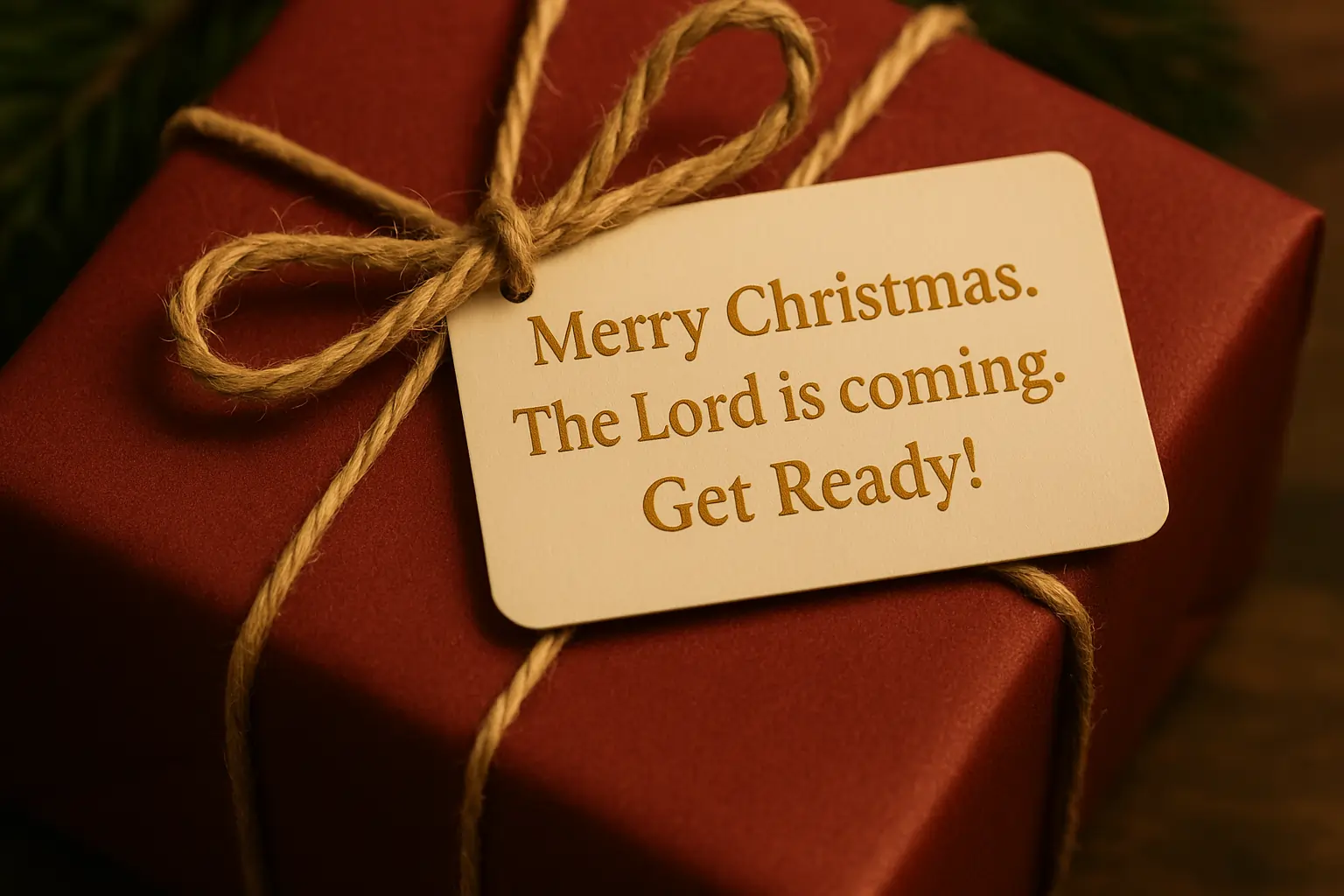
The heart of Christmas is the proclamation that God Himself has drawn near. Matthew begins by declaring that the Christ child would be called Immanuel, God with us (Matthew 1:23). He concludes by recording the risen Lord’s promise, I am with you always, even to the end of the age (Matthew 28:20). Together, these two statements frame the entire Gospel with the certainty of Christ’s abiding presence. Christmas announces that the God who entered the world in Bethlehem is the same God who walks with His people today and who will soon return for them in glory. His presence calls us to trust Him, obey Him, and proclaim His truth with unwavering confidence.
As we gather in this sacred season, when the Church lifts its voice in songs of hope and remembers the night heaven touched earth, we are reminded that Christmas is more than a tradition. It is the celebration of God entering our world with redeeming purpose. Yet the beauty of this season also invites us to look honestly at the world we now serve, a world increasingly uncertain about truth itself. It is here, in this moment of quiet reflection and holy remembrance, that we must turn our hearts to the message that follows. For we face a culture that has forgotten why His arrival mattered in the first place. Christmas should lift our eyes to the majesty of the incarnate Son, yet our generation often treats it as a pleasant distraction rather than a declaration of eternal truth. Ministers, this season calls us to something higher than warm traditions. It calls us to clarity, courage, and conviction.
Moral relativism is when people decide what is right or wrong for themselves, even though God has already given a clear and unchanging standard that applies to everyone.
Ministers, we cannot whisper the gospel into a culture that is sprinting toward moral relativism.
We cannot offer vague sentiments when people are drowning in confusion, cynicism, and spiritual amnesia. Our nation has reached a point where even Christmas is being emptied of its meaning. Once the clearest public witness to the incarnation, God’s embodiment in the person of Jesus (John 1:14), it no longer carries the truth it was given to proclaim. It is now stripped of its Christ-centered truth in the name of neutrality and sensitivity.
Consider what happened recently in Portland, Oregon. At the city’s 41st annual tree lighting ceremony on December 1, 2025, officials refused to call the 75-foot evergreen a Christmas tree. In every promotion, every announcement, and every speech, it was simply the tree. Not Christmas. Not Christ. Just a seasonal symbol drained of truth. The moment was overshadowed by activists chanting Free, free Palestine, waving a Palestinian flag onstage, and blending the event with Native American Heritage Day. Without regard for the varying views among Christians about Christmas trees, the message was unmistakable. The culture is not neutral. It is intentionally distancing itself from the story of Christ. Moral relativism does not tiptoe. It marches.
This is why ministers must speak with urgency. Scripture reminds us that as the lightning comes from the east and shines as far as the west, so will it be when the Son of Man comes. He will return from the heavens in His Father’s glory, surrounded by the angels with Him. We are also told that we must be ready, for the Son of Man is coming like a thief in the night at an hour we do not expect. Therefore watch. These are not poetic images. They are warnings, given by the Lord Himself, and they confront our generation with the reality that His first coming demands we live ready for His second.
This is not the hour for soft greetings or sentimental slogans.
This is the hour to proclaim that Jesus Christ is not a baby in a manger.
He is not a myth.
He is not a seasonal decoration.
He is alive, reigning, and returning.
When you say Merry Christmas, dare to add the truth that confronts every heart with eternity. Say:
“Merry Christmas, the Son of God is coming back, watch.”
“Merry Christmas, Jesus is coming again, get ready.”
These words are not harsh. They are merciful. They cut through the fog of relativism. They force the soul to face reality. They refocus Christmas on the coming Christ who will soon split the sky. In a nation where people fear offending anyone except God, it is time for ministers to recover the courage of the apostles. Christmas is not a cultural window dressing. It is evangelism in miniature. It is the annual announcement that God entered the world and will enter again in glory.
Ministers, take this as your season of boldness. Refuse to let Christmas be emptied of power on your watch! Confront the drift. Challenge the silence. Resist the cultural pressure to speak softly when Scripture speaks loudly. Let your Merry Christmas become a summons to repentance, a reminder of judgment, and an invitation to hope.
The King is coming.
Say it plainly. Say it often.
Say it with conviction worthy of the gospel you preach.
Christmas Challenge for Ministers
Brothers and sisters in ministry, as we proclaim the hope of Christmas, let us also carry the urgency of Christ’s promised return. Choose one of the challenge questions below and share it boldly with everyone you greet this Christmas season. Use it in your sermons, your social posts, your text messages, or your table conversations. Let this holy season stir the hearts of God’s people toward watchfulness, obedience, and joyful expectation of the Lord who will appear at an hour we do not expect.
After you share your chosen statement, return to this discussion and tell us what happened. Your reflections will encourage other ministers and help us discern how God is working through these conversations.
Challenge Questions
1. Merry Christmas. As this holy season marks His first arrival, what if tonight He returned like a thief in the night
Likely the most compelling and convicting choice. It uses a direct contrast of manger and second coming. It uses Jesus language about thief in the night, communicating urgency. People tend to remember questions that frame a hypothetical moment.
2. Merry Christmas. We rejoice over the Child in the cradle, but are we ready for the Lord who comes like a thief in the night
A strong pastoral choice. It presents a strong contrast, cradle vs. coming King. The thief in the night imagery carries biblical force that moves from sentiment to seriousness without harshness.
3. Merry Christmas. If the Son of God returned today, would your heart be watching, or surprised
Quiet but piercing, and personally convicting. It forces non-abstract, immediate and practical self-examination. Surprise vs. readiness stays with the listener.