
The Meaning and Scope of Atonement
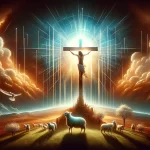
The doctrine of atonement stands at the very center of biblical theology. It explains how sinful humanity is reconciled to a holy God through the saving work of Jesus Christ. Without the atonement, there is no gospel, no justification, and no hope of eternal life. Scripture consistently presents the cross as the decisive act through which God satisfies His justice while extending mercy to sinners. The atonement is therefore not a secondary doctrine but the foundation of redemption. Evangelical theology affirms that the atonement is substitutionary, sacrificial, and sufficient for all who believe. It fulfills Old Testament typology and reaches its climactic expression in the death and resurrection of Christ. Any biblical definition must therefore account for both divine justice and divine love operating in perfect harmony.
Define Atonement in Biblical Terms
The English word atonement conveys the idea of reconciliation or restoration of relationship. In the Old Testament, the primary Hebrew term is kaphar, often translated as to cover or to make reconciliation. According to Vine’s Expository Dictionary of Old and New Testament Words, the term carries the sense of expiation or removal of guilt through sacrifice. The sacrificial system, especially the Day of Atonement in Leviticus 16, vividly illustrates this principle. Blood was shed because sin required judgment. The sacrifice symbolically bore the penalty that belonged to the sinner.
In the New Testament, the Greek vocabulary expands this meaning. Terms such as hilasterion and hilasmos convey propitiation, meaning the satisfaction of divine wrath. Christ is presented as the propitiatory sacrifice whose blood secures redemption. The apostle Paul writes that God put Christ forward as a propitiation by His blood, to be received by faith, in Romans 3:25. This establishes that the atonement is not merely symbolic but effectual.
Examine the Theological Structure of the Atonement
Classical Evangelical theology defines the atonement as the substitutionary death of Christ in which He bore the penalty of sin in the place of His people, thereby satisfying divine justice and reconciling them to God. James P. Boyce affirms that Christ’s atoning work fulfills the demands of divine justice while securing redemption for the elect. The atonement therefore includes several interwoven elements.
First, it is substitutionary. Christ dies in the place of sinners. Isaiah 53 declares that He was pierced for our transgressions and crushed for our iniquities. Second, it is propitiatory. Divine wrath against sin is satisfied. Third, it is expiatory. Sin is removed, not merely overlooked. Fourth, it is reconciling. The barrier between God and humanity is removed. Fifth, it is redemptive. The believer is purchased from bondage through the blood of Christ.
These dimensions do not compete with one another. They describe the same saving event from complementary angles. Evangelical theology rejects any reduction of the atonement to moral influence alone. While the cross certainly demonstrates God’s love, it primarily accomplishes objective reconciliation.
Clarify the Doctrinal Significance
The atonement safeguards both the holiness and the grace of God. God does not forgive by ignoring sin. He forgives because the penalty has been fully paid in Christ. This preserves the integrity of divine justice. At the same time, it magnifies divine mercy. The believer stands justified not by personal merit but by Christ’s righteousness imputed through faith.
Furthermore, the atonement anchors the missionary mandate of the church. Because Christ has accomplished redemption, the gospel can be proclaimed to all nations with confidence. Everyday life becomes a field of witness, as believers testify that reconciliation with God is available through faith in the crucified and risen Lord.
In summary, the doctrine of atonement teaches that Jesus Christ, through His substitutionary death and victorious resurrection, satisfied the righteous demands of God’s law, removed the guilt of sin, reconciled believers to the Father, and secured eternal redemption for all who trust in Him. How does your understanding of Christ’s atoning work shape the way you proclaim the gospel in your daily life?
Sources
Boyce, James P. Abstract of Systematic Theology. Christian Classics Ethereal Library.
Vine, W. E. Vine’s Complete Expository Dictionary of Old and New Testament Words. Thomas Nelson.
Related posts:
 100 Essential Christian Theology Terms Explained
 The Doctrine of Sin: Humanity, Fall, and Redemption
 Doctrine of Soteriology (Salvation) Explained Clearly
 Doctrine of the Son Christology in Evangelical Theology
 Misusing Bible Verses for Social Justice: Truth in Context
 John Calvin & Calvinism: Five Points, Theology, Legacy