
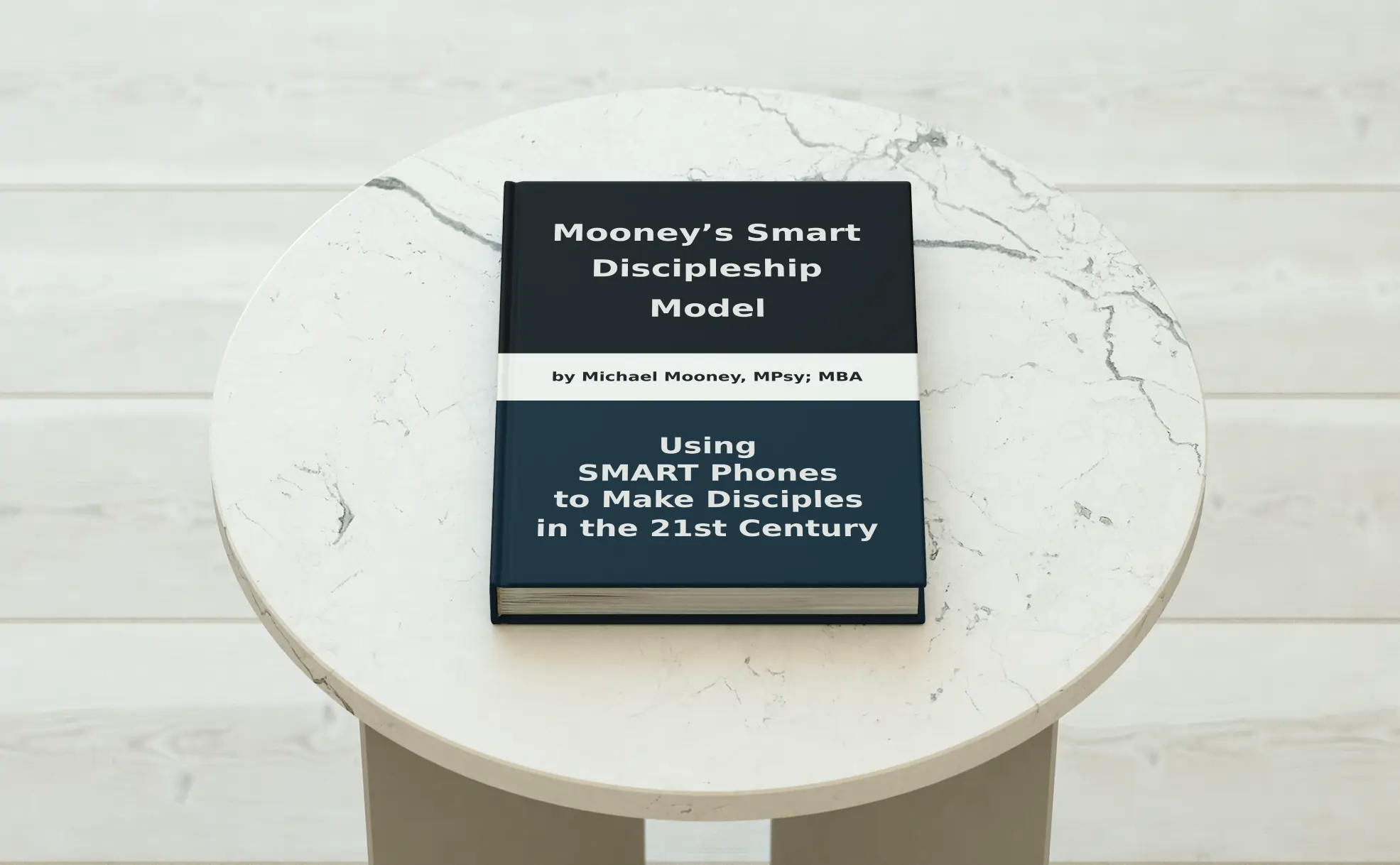
 Abstract
This work advances the scientific body of knowledge surrounding three domains of communication: 1) transformational leadership; 2) Christian discipleship; and 3) smartphone/social media interaction. Its aim is to develop an online training model to prepare ministers to conduct 21-century discipleship.
TABLE OF CONTENTS
Introduction, Literature Review, Methodology, Expected Results, Discussion, References
Introduction to Smart Discipleship
Organizational leadership is a phenomenon which has particularly captured the interest of scientific inquiry over the last 60 years. Even still, the word leadership tends to be viewed conceptually by the imagery of imagination. Seeking to dispel the mysteries which surround such ambiguity, scholars identify a relatively uniform acceptance of the word’s definition. Leadership is accepted as a process of guiding people toward a shared vision (Takala, 1998). Nevertheless, it is the identification of that process which remains unsettled. For this reason a variety of leadership theories have emerged. It is important to evaluate leadership theories because many of them sound like common sense at the very least, or completely brilliant at the very best. However, when these ideas are applied, it is the results which stand as the most objective measures. It is in results that facts may be separated from fiction. Knowledge and or the cognitive harmony set forth by theoretical expectations remain just that –unsubstantiated theories.
Application of transformational leadership is proposed to as a construction by which ministers may establish and carryout a process of discipleship in the 21st century. The focus of this spiritually based relationship is concerned with the development deeper commitments to God by inspiring worship beyond the routine expectations set by regular church attendance. This will be carried out by communication which is only afforded to smart phone technology. The overreaching purpose of this research is to determine if ministers will benefit from an online training designed to teach the incorporation of transformational leadership principals to discipleship relations, within the context of virtual mediums.
Literature Review of Leadership Theories
Organizational Communication
Since Thomas Friedman (2006) declared the world flat, globalization has become a focus for many organizations. Because people are the essence of organizations, global communication has become a familiar vehicle by which to conduct business and stay connected. Over the last 100 years, the nature of organizations and the way their members are connected has changed dramatically. This has much to do with the growth of innovation, technology, and the development of advanced methods of communication via. smartphones. As a result, the world is quickly becoming a big village which is no longer separated by the borders of ocean shores and geographical boundaries.
Currency flows freely across technological channels linked to satellites which bridge previous economic gaps of supply and demand. As a result, new points of contact are being established globally. For example, Coke and Pepsi products are now being carried through mud holes and marketed to people who barely have suitable drinking water (Strategic Direction, 2008). Without the previous communication boundaries of geographical locations, new economies are arising in places which were considered uncivilized not so long ago.
Organizations are quickly realizing the necessity to adapt, in so doing their previous structures and hierarchies are being challenged against the functionality necessary to operate in a 24-hour marketplace unrestrained by time zones or weather conditions. Cultural diversity is at the forefront of both the ingenuity and complexities of organizational sustainability. Geographical regions, countries, and nations all have native cultures which play significant roles in the integration of new constituents. By default, these variables also contribute to the continual development of organizational cultures and subcultures. Leaders are finding themselves in the middle of such complexity bearing the responsibility to unite such differences into perceived benefits which contribute to the realization of organizational objectives (Schein, 2010).
While leadership is by far not a new concept, the expression of leadership within the context of virtual environments is. The acceptance of this practice is quickly gaining recognition as a beneficial platform for organizational connectivity. More than 50% of American companies are embracing the use of virtual platforms to conduct meetings and facilitate teams on some level. This number is expected to experience a 44% increase in the very near future (Mukherjee, Lahiri, Mukherjee, & Billing, 2012).
There is a growing need to develop new management-based approaches by which to lead within the context of virtual platforms, and to develop leaders for tomorrow. This movement is referred to as virtual leadership development. Human Resource Managers find it as a viable approach by which to maximize the uses of current technology while minimizing operational expenses associated with the necessity for organizational members to interact face-to-face (Colfax, Santos & Diego, 2009).
New Skill Sets
For leaders to adapt to contemporary leadership needs, they must develop new skill sets. There are at least four apparent categories which monitor the evolution of new proficiencies. These include: 1) the necessity for flexibility; 2) independency; 3) service centeredness; and 4) knowledge.
Among these competencies flexibility leads the way; characterized by strategically embracing change to service with continually evolving needs. Independency is a necessary understanding for useful integration into decentralizing organizations, resulting in less direct supervision by managers. Customer centeredness is becoming all the more important because one size no longer “fits all” (or even most). Customization to individualization is the new standards of service. For this reason, it follows that knowledge is becoming both a currency and an expectation (Martin & Healy, 2009).
Industrial/Organizational Psychology
Known for a scientific approach to the study of workplace behavior, I/O psychology is a natural fit in this discussion. I/O practitioners seek to offer verifiable solutions to undesirable circumstances within organizations (SIOP, n.d.). As a branch of psychology, the discipline focuses upon the dynamics of individual, intrapersonal, and interpersonal human relations within the contexts of organizations. Popular areas of focus are morale, organizational citizenship behavior, motivation, and of course leadership. Quintessentially, these areas are directly linked to leadership in terms of their researched outcomes. People with whom I/O psychologists work are often those within Human Resource Departments (HR) and executives, (i.e. leaders). (Industrial/Organizational Psychology, 2009).
These describe organizational relations with professionals of this discipline. A bigger picture of the industry is visible in this contrast. On individual levels, I/O consultants focus on employee testing, selection, development, and attitudes. On organizational levels, consultants focus on change, climate, culture, structure, etc. All these categories are of direct interest of leadership (I/O Overview, 2004).
Without question, I/O psychology is an organizationally focused discipline; thereby making it a topic of interest to the church. The church globally is the largest organization in the world. Out of an estimated world population of 6.9 billion people, Christianity accounts for some 2.18 billion. This makes Christianity the largest religion in the world, encompassing 1/3 of the world’s population. Further, the United States contributes 11.3% of the Christian population in the world, and 79.5% of the US population is identified as adherents of the Christian faith (Hackett & Grim, 2011). In consideration of these numbers, it follows that Jesus Christ is both the most inspirational and influential leader in world history. Even though more than 2,000 years have passed since his crucifixion, today he is still noted for leading 1/3 of the world’s population.
Defining Leadership
Leadership is identified as a process of directing people toward outcomes which previously existed in the form of shared vision. Definitive leadership generally consists of two commons: 1) a cooperating group, and 2) someone influencing the group toward a shared goal. Areas where definitions of leadership differ are in relation to the identification of the influencers, their goals, and the way in which they are achieved (Takala, 1998). The very essence of leadership is vision. Solomon, the ancient known for his wisdom says: “Where there is no vision, the people perish” (Pro 29:18, KJV). Therefore, “Leadership determines the overall plan and infuses the system with a character and direction…Hence the leader is a beginner of plans” (Jennings, 1961, p. 3).
Origin of the Transformational and Transactional Theory
Transformational leadership theory began as the work of James Burns (1978). He proposed a model of leadership consisting of two categories 1) transformational; and 2) transactional. Burns saw these two aspects as being part of a whole toward the leadership and management of people within organizations. However, some hold these as separate models. For this reason, a brief differentiation is necessary.
Burns (1978) idealized leadership as being directed by influence obtained through relationships founded on shared commitments. This approach aims to use shared values to develop a community willing to contribute to higher organizational objectives. Emphasis is placed on shared agreement as a means to redefine perceptions and set new expectations. The entire concept is rooted in the development of people though service toward greater versions of themselves. The psychological underpinnings of transformational leadership are intrinsic and moral motivation.
Transformational theory is a moral approach to leadership through the valuing of human dignity by the elevation of self-esteem, fulfillments, and actualizations of those who follow (Whetstone, 2002). “Transformational leaders demonstrate self-confidence, the ability to articulate a vision, a willingness to pursue the vision even if they must assume high personal risks, and an ability to promote change” (Giampetro-Meyer et al., 1998, p. 1728). This approach is people-centered by focus on the communication characteristics associated with “influence; vision; trust; respect/credibility; risk-sharing/delegation; integrity; and modeling” (Hannay, 2009, p. 4).
The transactional perspective assumes “followers act in their own self-interest” (Schafer, 2005, p. 231). This approach appeals to human needs to motivate followers (Whetstone, 2002). The concept is that humans continually evaluate their relationships in terms of valued exchanges with the most favorable outcomes being that they receive more than they give (Locander & Luechauer, 2006). “An effective transactional leader is one who makes it clear that those who give something to the organization get something in return” (Giampetro-Meyer, Brown, Browne & Kubasek, 1998, p. 1728).
While this may seem like a self-centered approach to leadership, the very concept of leading implies that people are following leaders toward common goals. In a work environment the most common goal is the transaction of money. If the “transaction” component is removed from the application of any leadership methodology in the workplace, there is likely to be loss of influence somewhere in the process. There is no conclusive ground on which to determine if transformational and transaction methods should be administered together as a single approach, or separately. Scholars hold both views (Robbins & Judge, 2007; Leithwood & Poplin, 1992).
Progressive Model
Bass (1996) differentiated transformational and transactional approaches as opposites; not intended to be studied harmoniously. This noted distinction is necessary because transformational leadership is more clearly understood by contrast of transactional leadership. For this reason, Bass speaks of transactional leadership with regularity in focus of his research upon the transformational aspects of Burns’ (1978) original theory. Bass’ (1985) greatest contribution to the development of transformational leadership is the clarity he offers by means of the “four I’s.” The author identified four characteristics of transformational theory in the following: 1) intellectual stimulation; 2) idealized influence; 3) individualized consideration; and 4) inspirational motivation (AKA charisma). As Giampetro-Meyer et al., (1998) describe it, “Transformational leaders demonstrate self-confidence, the ability to articulate a vision, a willingness to pursue the vision even if they must assume high personal risks, and an ability to promote change” (p. 1728).
The Four “I’s”
1) Individualized consideration is described as the action of meeting members’ needs from an individual and subjective standpoint. These needs may be emotional, physical, professional, etc.
2) Inspirational motivation is the process of vision casting in a clear and articulate manner which can be easily understood and pursued.
3) Idealized influence is the aspect of building interpersonal rapport through the expression of personalities and individual qualities.
4) Intellectual stimulation involves the skilled expression of special knowledge in such a way that promotes a desire to further education and the expression of creativity (Chung-Kai & Chia-Hung, 2009).
A comparison can be seen between individualized consideration and the transactional angle of leadership. This is evident in how the transactional approach holds the assumption that relationships are continuously evaluated for value exchanges and individualized consideration is the aspect of leaders meeting the needs of constituents. Those strategically utilizing the transformational model will likely keep some sort of mental record of their contributions to the needs of those which they lead. In so doing, a similarity between transactional thought and individualized consideration is established.
In consideration of inspirational motivation, there also can be an observable relationship with transactional thinking. Inspirational motivation is often descriptive of leadership’s ability to cast a compelling vision. In such instances, it follows that there are at least two elements of motive.
1) Leadership seeks to establish participants with which to share their vision.
2) Participants of a shared vision have an “interest” at heart for which they strive with others to attain. Hence it follows that shared vision can appeal to the “what’s in it for me” question of transactional rationale.
Nevertheless, the clear distinction of transactional leadership is characterized by influence being dependent upon contingent rewards/consequences. From this perspective, transactional exchanges seem better classified as management rather than leadership. Managers allocate resources for the benefit of an institution. In essence, all employees perform this action in one capacity or another. While there are many similarities between the two, managers allocate resources for the benefit of an institution, “leadership is a process whereby an individual influences a group of individuals to achieve a common goal” (Northouse, p. 3, 2013). The rational of those influenced by transactional methodology is that motivation is generated through the allocation of agreements, compliments, and recompenses; oppositely coupled by corrective measures and organizational policies (Bass & Steidlmeier, 1999).
The results of most factor studies validate that Bass (1996) rightly makes the distinction between transformational and transactional thought (Yukl, 1999). This distinction is measured by definition of a leader’s behaviors which contribute to motivated outcomes. In other words, Bass (1996) observes transformational leadership by the outcomes associated with the influence the leader develops and utilizes to motivate members toward organizational objectives. Influential factors of leader-constituent relations are anchored in quality assessments of trust, appreciation, and devotion held toward a leader.
Conceptually, these factors are proportional to motivating members to reach goals beyond their own perceived limitations, and self-interests (Bass & Steidlmeier, 1999). The psychological underpinnings of this framework are that of self-efficacy, self-concept, empowerment, human motivation, and rapport. Of particular interest to I/O practitioners might be the similarities of Social Learning Theory, Locke’s Goal-Setting Theory, Alderfer’s ERG Theory, McClelland’s Learned Needs Theory, Vroom’s Expectancy Theory, and Maslow’s Hierarchy of Needs. (Barnet & Simmering, 2006).
Scientific Merit
In addition to the great contributions that Bass (1985) has made to the development of transformational leadership, he and Avolio (1985) are also noted for originating the Multifactor Leadership Questionnaire (MLQ). Although this test covers a variety of leadership behaviors, it is designed specifically with transformational leadership in mind. The updated version covers five areas relevant to the theory. These are Idealized Attributes, Idealized Behaviors, Inspirational Motivational, Intellectual Stimulation, and Individualized Consideration. These categories are almost identical to the four I’s, with the exception that Idealized Influence is divided into Idealized Attributes and Idealized Behaviors (Geisinger, et al, 2007).
The assessment is structured as a Likert scale which is designed to be administered to organizational members to rate key behaviors of organizational leaders. Considerable research using the MLQ supports the hypothesis that transformational leadership is measurable and leads to the effectiveness of organizations (Yukl, 1999). The MLQ is convent for research because it can be administered in paper or Internet based formats. Results are provided by the publishers. It is often used by I/O consultants and researchers because the psychometric properties are well substantiated by internal and external validities. For these obvious reasons, the assessment has become the standard for research pertaining to transformational leadership theory. Most importantly, the tool is said to offer the information necessary to form reasonable predictions of individual and group behaviors attributed to performance variances in organizational effectiveness. (Geisinger, et al, 2007).
Weaknesses in the Theory of Transformational Leadership
Yukl (1999) conducted a review of transformational leadership aimed at identifying its weaknesses and gaps by which to propose future research. His name surely stands out among the academic literature because it is rare that transformational theory becomes the subject of negative focus. Yukl’s (1999) observations generally fall into two categories 1) influential processes, and 2) influential behaviors. He demonstrates that there is a lack of clarity regarding the influential process as a weakness in the transformational leadership approach. He argues that influence (in the context of leadership) is a process which requires at least two people who engage in a sequence of communications during an unspecified timespan. The results of these exchanges involve some form of compliance, role identification and internalization. Further research into these factors may offer insight into leadership behaviors which correlate to emotional arousal, changes in beliefs, increases in commitment to a cause, and overall optimism.
Regarding influential behaviors, Yukl (1999) argues that ambiguity surrounds the identification of specific transformational actions taken by a leader. What things should a leader say to initiate influence by means of cognitive processes? How are leader behaviors identified with the four I’s of transformational leadership? These things are not clear and left to inductive factor processes and conceptual reasoning as a means by which to observe them for purposes of research. For example, there is substantial research which correlates idealized influence with member satisfaction toward leadership. However, the findings also demonstrate a week association with member motivation, which ironically is strongly supported as a quality of transformational outcomes in general.
Additionally, factors such as psychological safety, emotional expression and espoused beliefs are used to identify idealized influences. Yet, how these factors are differentiated from idealized influence is not clear. Hence, Yukl (1999) argues that there are overlapping concepts within the separate categories of the four I’s. Nevertheless, transformational leadership continues to be supported by research correlating it with organizational effectiveness (Lowe, Kroeck, & Sivasubramaniam, 1996), and Yukl’s (1999) findings agree. Despite the above-mentioned weakness surrounding ambiguity, transformational leadership continues to produce desirable leadership outcomes.
Reducing Behavioral Ambiguity
Schuh, et al. (2012) identifies team cooperation as a behavioral component of transformational leadership. This is achieved through organizational identification; recognized as the personal perception of belonging to an organization as a single part of a collective whole. People who identify with organizations have the propensity to take ownership and exhibit organizational citizenship behaviors. The authors characterize four actions of team cooperation:
- Leaders express strong personal identification with their organizations.
- They foster identification in organizational members by modeling courage and dedication to the vision.
- They highlight shared values and interests.
- They personally coach and develop members.
Among these expressions, the concept that transformational leadership can manage and improve team performance through conflicts. Schuh’s et al, (2012) research shows that transformational leaders who promote team cooperation overcome conflict and increase productivity.
Additional research demonstrates that transformational leaders’ effect heightened awareness of the significance of member contributions to organizational operations. As a result, members come to understand the importance of their continual personal development, thereby desiring growth. (Jones, George, & Hill, 2006). In training situations where instructors utilize transformational leadership, students are inspired to exert extra effort toward goals, utilize resources toward greater success, and experience fulfillment in their activities (Pounder, 2008).
Leadership Development
The crux of transformational leadership is in the development of others; hence, the word “transform.” Therefore, it is fundamentally necessary to examine the beliefs about leadership development as a means by which to qualify others for development. Dr. Heine (2007) points out, it is a common myth that “‘So and so is a born leader, a person so richly endowed with smarts and charisma that he or she seems like a walking, talking billboard for genetic predestination’ — i.e. nature over nurture” (Reithel & Finch, 2007, p. 30). It follows that participants in a leadership development program must share the philosophy that leadership qualities may be cultivated in anyone willing to take initiative –not limited to those born with charisma.
It seems fitting to consider the meaning of leadership development. This term describes a grooming process by which to prepare organizational members for leadership within their organizations (Smither, J. W., & London, M. (2007). Leader development is similar in scope but is different in the focus upon the nature of the individual self-preparing for leadership vs. the focus of development of relations between leaders and followers (Day, 2000). It is important to note that much research on the subject clearly demonstrates the effectiveness of leadership training programs (Boyatzis, 2008).
Approaches to Leadership
There are a variety of approaches by which institutions organize and standardize the selection and preparation of leaders (Riggio, 2008). For example, some hold the view of equal opportunity for leaders to rise from all levels; contrastingly, others believe leaders should be chosen at employment. Still some organizations believe leaders should demonstrate proficiency on all departmental levels, while others believe in development of specialized positions. Still, other views hold greater concern for cultural applications to leadership by defining needs for transformational or transactional leadership theories (Smither & London, 2007).
Regarding leadership development, Riggio (2008) points out that, “nearly every author mentions that leaders must develop awareness of their own leadership strengths and limitations to capitalize on strengths and overcome shortcomings” (p. 387). Irrespective of developmental approaches, it seems that these qualities make up the undercurrent which guides all approaches to the preparation of leadership. It also follows that this applies to the continual development of leadership. With this information in view, it seems advantageous for organizations to foster culture which recognizes personal steps toward continual self-improvement. Theoretically, this should motivate members toward a natural appreciation for their personal growth.
Virtual Factors of Leadership
Because this proposal aims to develop an online course by which to prepare ministers to develop “smart disciples”, a consideration of distance factors pertaining to virtual communication is necessary. Erskine (2009) identifies four evidence-based factors of distance within virtual environments:
1) geographical;
2); structural;
3) psychological; and
4) relational.
Geographical Distance
Geographical distance is likely the most obvious factor within the context of virtual exchanges. After all, virtual platforms serve as alternatives to face-to-face communications. Nevertheless, there are a few not so obvious factors. For example, Erskine (2009) observes that people are often less conscientious of time in geographically shared face-to-face meetings than virtual. Additionally, leaders often notice a loss of the convenience for easily calling meetings into focus upon the tasks at hand in virtual settings. However, it should be noted that Erskine (2009) found no differences in the leadership influence in centrally vs virtually located members.
Structural Distance
Structural distance describes the presence of leadership/organizational structure when challenged by geographical distance of leaders/organizations. Erskine (2009) found that members tend to experience autonomy and a sense of empowerment when they are distant from the enforced structure by leaders. However, there are also drawbacks to this freedom. Some people do not function well without structure; thereby resulting in difficulties understanding expectations, coordinating tasks, and receiving feedback in a timely fashion. Nevertheless, the research did not find a significant difference between performance and structural distance.
Psychological Distance
Psychological distance describes negative emotions experienced by a perceived lack of connectedness with leaders. Erskine’s (2009) research demonstrates a correlation between the sense of connectedness members experience with leaders and their perceptions of trust in leadership decisions. Additionally, coloration exists between higher levels of role satisfaction and the willingness to defend leadership through trying circumstances. The implications follow that developmental relations conducted within virtual environments will benefit by emphasizing leader-member connectedness; thereby, fostering trust and contentment.
Relational Distance
Relational distance describes the overall perceptions of favoritism relating to leader-member relations within organizations. Organizations function through working roles defined by positional hierarchies, titles, and responsibilities. In one aspect these structures are clearly defined by organizational access, authority, and policies, yet there remain unofficial and ambiguous structures subjectively defined by interpersonal relations (Betts, p. 115, 2004).
People generally embrace organizational environments from at least one of two perspectives: leader to member or member to member (Chung-Kai & Chia-Hung, 2009). As a result, favorable or unfavorable status judgments are formed based upon perceived connectedness with leadership (Northouse, 2010). Naturally, perceived favoritism leads to negative conclusions regarding organizational justice. If a reasonable distance is not held between leaders and the expectations of members (regarding their roles), perceptions of “in” and “out” crowds may form (Deluga, & Perry, 1994). However, research suggests that such distance occurs at the expense of potentially increased levels of intrinsic motivation, satisfaction and member loyalty (Erskine, 2009). Such is the essence of transformational outcomes.
Organizational Justice
Organizational justice is typically viewed through the lenses of procedural and interpersonal transactions with leaders. Procedural judgments are formed around perceived fairness in the enforcement of policies. Interpersonal judgments are formed by interpretations of direct interactions with leaders. Employee attitudes about job satisfaction, commitment, fatigue, and intentions regarding separation are all affected by perceptions of fairness in matters of procedure, distributions, and treatment. Where trust is low, studies show that even fair conditions have little or no effect on employee cooperation. However, when trust is high, employees are more likely to dismiss, justify, or at least minimize perceived negative circumstances because of their relationships with leadership (Piccolo, Bardes, & Judge, 2008).
Best practices of these findings imply that effective leadership administered through virtual channels maintains a peripheral view of these distances. Their strengths and weaknesses are understood and leveraged to manifest desirable outcomes. Such goals include building relationships which foster trust, empowerment, flexibility, organizational loyalty and role satisfaction. “Exceptional leaders—in terms of their confidence, charisma, and leadership style—motivate followers to focus on aspects of procedural and interpersonal fairness…thus enhancing the utility of organizational justice” (Piccolo, Bardes, & Judge, p. 280, 2008).
Trust
Trust is a necessary component of positive human relations and essential to effective leadership. This is true between individuals, groups, and organizations. In fact, without trust people remain focused on their individual agendas. It is not until trust is established that individuals will genuinely redirect their energies toward mutually shared objectives (Kath, 2007).
Deluga (1994) identifies trust as the essential element of employee satisfaction, productivity, and leadership effectiveness. Of course, it follows that perceptions of an unfair professional climate is the leading cause of suspicion and loss of trust in leadership. This outcome aligns with equity theory which predicts that employees will give back to organizations the proportion that they believe they are rewarded. Low quality leadership exchanges are directly related to losses of morale and declined productivity. However, high quality relationships result in employees feeling an obligation to return to high quality labor.
Of course, the assessment and establishment of trust is also contingent upon the context in which the trust is required. For example, trust factors may rest more on faith in a technical skill rather than personal character. Nevertheless, trustworthiness is rooted in the credibility and reputation of the recipient. Theoretically, these factors are the products of good interpersonal transactions that lead to commitment to keeping relationships consistently over time (Glasser, 2002).
Because trust is the quintessential of positive influence, leaders should make it a central focus of their relational outcomes. Rogers and Riddle (2006) pinpointed six best practices for developing virtual trust:
- Maintain one another’s self-esteem.
- Support and praise one another.
- Keep sensitive information confidential.
- Stand up for one another.
- Avoid gossip or unfair criticism of others.
- Appreciate one another’s skills and differences
Additional trust building action are “supervisor availability, competence, consistency, discreetness, fairness, integrity, loyalty, openness, promise fulfillment, receptivity and overall trust” (Deluga, p. 317, 1994).
Ethics
The ethical strengths of I/O Psychology are found on a perpetual focus to improve the dynamics of individual, intrapersonal, and interpersonal human relations within the contexts of organizations (Industrial/Organizational Psychology, 2009). One of the limitations of the practice is a lack of clear principles in terms of written ethical codes for the profession. Some point to the APA’s general code as the standard for I/O ethical conduct. However, this code is written with the perspective of therapeutic psychological practices in mind. For this reason, the APA’s code is not well matched to the I/O practice and profession. Dr. Stephen Behnke, Director of Ethics for the APA reports “The APA Ethics Code is inadequate for I/O psychology” (2006, p. 66).
Nevertheless, there are a few principles from the APA code of ethics which can be applied to this proposal. The General Principals portion of the APA’s (2010) Ethical Code of conduct offer the following examples: Practitioners strive to benefit, safeguard, and do no harm (principle A). Practitioners seek to establish trust (principle B). Practitioners maintain scientific integrity (principle C). Practitioners seek to maintain justice (principle D). Practitioners support the rights of privacy, confidentiality for individuals (principle E).
Cultural Consideration
On a national level, the US is growing rapidly. The current outcome of this expansion demonstrates the White population is slowing, and minorities such as Latinos are growing at almost 4 times the majority rate. Furthermore, the best-known US minority groups such as Asian, Native, and African, are also growing at rates greater than those of the majority (Zoccolillo, 2008). These are clear indicators that American culture is becoming increasingly more divers. For this reason, there is a greater necessity for multicultural awareness than ever before, and this is only anticipated to increase. Any approach to ethical reasoning should consider these factors in the interest of organizational populations.
Alignment of Faith and Methodology
Determining the best style of leadership to use in each situation is no easy task. It seems erroneous to think that only one theoretical approach fits every need. Therefore, when considering a strategic leadership approach it follows that there are at least two necessary factors to consider 1) the purpose for which a leadership approach will be applied; and 2) the context in which it will be initiated. The purpose of this study is to develop an online course aimed at training ministers to apply transformational leadership to a worship focused model of discipleship, communicated using smartphone technology. It seems the most effective way to achieve the most ideal results is to offer the training in the same way they will offer it to disciples.
With respect for the diversity of possible leadership approaches; theory and preferences alone are not enough to justify the ministerial acceptance of such practices within the scope of Christian discipleship. It is not likely that ministers of the gospel will accept any approach which cannot be validated by the principles of leadership established by Christ and promulgated by his apostles.
This proposal selects the theory of transformational leadership because the ideology of this theory is regarded as biblically consistent with the leadership teachings of the New Testament. Further, it already embraced by contemporary Christian religious leaders as a strategic approach to church leadership and the development of parishioners. (Cooper, 2005; Sosik, Zhu & Blair, 2011; Gorlorwulu & Rahschulte, 2010).
Christian Discipleship
Discipleship is an interesting term which has a variety of meanings within the minds of those who hear it. It could be descriptive of a teacher-student relationship surrounding any academic discipline or subject. Yet when discipleship is used within the context of Christian thought, the possibility of meanings is thereby narrowed. A general account may describe a spiritually based mentoring relationship which uses the life and work of Jesus Christ as a model for developing a closer relationship to God, continual spiritual growth and personal improvement.
The application of transformational leadership is proposed as a construction by which ministers may establish and carryout a process of discipleship in the 21st century. The focus of this spiritually based relationship is concerned with the development of deeper commitments to God by inspiring worship beyond the routine expectations set by regular church attendance.
Ironically, the word discipleship is not used in the Bible (Discipleship, 2002). However, variations of the word (such as disciple) are used (approximately 274 times). Probably the most noteworthy example is a statement made by Jesus which has been coined as “the great commission.”
Go therefore and make disciples of all nations, baptizing them in the name of the Father and of the Son and of the Holy Spirit, teaching them to observe all that I have commanded you. And behold, I am with you always, to the end of the age.” (Mat 28:19-20, ESV).
This must have been an amazing instruction to the Jewish disciples who viewed salvation primarily for the Jews (Romans 1:16), and who had a very limited concept of the world as a whole. Since these words were spoken, they continue as the priority of Christ’s disciples. Even unto this day, the church holds them as a mandate of God for the propagation and establishment of His Kingdom. In the Great Commission the concept of discipleship is outlined, and the use of the word disciple is consistent with the general secular definition. Nevertheless, the hereafter use of the word discipleship (including variations) is descriptive of a Christian perspective of the term.
Regarding the great commission, Kauffman (2004) is noted for saying, “It is not our responsibility ‘to make people ‘Christians’ and get them baptized into a particular denomination, but rather to help people decide to follow Jesus and his radical message. Maybe this is why the New Testament writers only use ‘Christian’ three times but ‘disciple’ on 269 occasions!” (Kauffman, 2004). It has not been verified weather or not this number of occurrences is accurate, but the message communicated by this quote is very consistent with transformational leadership objectives.
The MacMillan dictionary of the Bible states “Jesus explains that discipleship involves committing one’s whole life to God. Jesus is the model for discipleship, with the cross as its symbol (Mark 8:34-5) and his servanthood its pattern (Mark 10:42-5)” (Discipleship, 2002). In agreement with this Biblically supported statement, there are several factors which define and direct Christian discipleship.
1) Jesus is the source of the teachings which pertain to the Great Commission, “teaching them to observe all that I have commanded you.” (Mat 28:20).
2) His life serves as the model of leading disciples.
3) Discipleship is a purposeful act which involves “going.”
4) Jesus is present in the disciple making process, “I am with you always, to the end of the age.” (Mat 28:20).
Following this rationale, there are two important facts of Christ’s method of discipleship which seem to be overlooked by the institutionalization, and then segregation of the church into denominations.
1) Jesus modeled the behavior of “going” and finding people where they were –as opposed to expecting them to come to him.
2) Discipleship occurred in the realm of everyday life (i.e. the marketplace, public water fountains, rivers, and the fields where people tilled the ground. In other words, discipleship did not take place inside the walls of church buildings.
This point is significant to this report because the proposal is to develop ministers online (from where they are), to facilitate discipleship to people using smartphones (wherever they are). Meeting people on these terms is very consistent with the very roots of Church history. Jesus made a regular appeal to people to “follow him” (Mat. 10:36, 16:24, 19:21; Mar. 8:34, 10:21; Luk. 9:23, 18:22; Joh. 10:27, 12:26, 21:22).
Yet in every occasion he called them from where they were, which is where he was! Additionally, responding to his call did not result in the realization of a particular location. In fact, on one occasion a man replied that he would follow. Jesus said to him, “Foxes have holes, and birds of the air have nests, but the Son of Man has nowhere to lay his head.” (Luk 9:58 ESV).
Ironically, those who answered his call found themselves being told to “go” as the path by which to follow (Mat. 5:24, 5:41, 8:4, 8:13, 9:6, 9:13, 10:5-7, 19:21, 28:19). In view of the advancements in mobile technologies, communication with “all the world” is more possible than ever before. The church must consider these possibilities in order to fully enjoy the advantages afforded by them. For these reasons, it is anticipated that ministers will receive the proposal of this research with gladness, and that it will invoke divine favor from God because of its consistency to Christ’s example.
Transformational Integration of Discipleship Model
The transformation model will be integrated into discipleship by application of the four “I’s.” The following is an explanation:
- Ministers will experientially learn to utilize individualized consideration when communicating theological concepts with smart-disciples. In other words, ministers will develop the ability to relate Biblical teachings in a manner which speaks to the needs and individuality of smart-disciples.
- Ministers will experientially learn to develop fresh and creative ways to use inspirational motivation as a means by which to encourage deeper commitments to Christ.
- Ministers will experientially learn to develop idealized influence with disciples by highlighting personality and individuality to people of the Bible, smart-disciples, and themselves.
- Ministers will experientially learn to use intellectual stimulation to draw intrigue and inquiry to learning more about God.
The method for communicating this training will be to bring ministers though an experience very similar to the ones which will be encountered by the smart-disciples they will lead. This method will equip them with the experiences necessary to truly identify with the future smart-disciples which will be in their care. Further, it will acquaint them with the potential technical difficulties which may be experienced; thereby, helping them to anticipate and overcome obstacles to the process. Additionally, curriculum will be used to introduce ministers to the previously mentioned virtual aspects of leadership, best practices, and ethical considerations.
Chapter III: Methodology Description
This section offers a clear description of the purpose of the proposed research. The problem sought to be resolved by the research is discussed, accompanied by the research question. The sample is described along with the
Purpose of Study
The purpose of the proposed research seeks to determine if transformational leadership can be effectively applied to a worship-based model of discipleship delivered solely using online smartphone channels. Such might be evidence by meaningful discipleship relations which result in greater worship encounters than those produced by traditional face-to-face discipleship approaches.
By review of the literature in the previous chapter, it is established that transformational leadership has a rich history in research. It is also clear the transformational leadership is a moral approach to member influence, and consistent with the behaviors and teachings of Christ. For these reasons, it is not surprising that it is used as a method for leading Christian people. The application of this theory across virtual mediums has become a topic of contemporary study, but findings pertaining to this interest are still in infancy. The integration of transformational theory into a discipleship model focused on worship and tailored for delivery via smartphone technology is nonexistent in academic literature. In fact, no literature could be found relating transformational leadership to Christian worship. Lastly, no research seems to exist at present which involves transformational communication using text messages. Therefore, the following research question is posed:
Is there a difference between worship experiences of ministers before and after the ministers take an online course teaching worship discipleship modeled on transformational leadership?
Sample
The sample will consist of ordained Christian ministers. Ministers are selected because the training is designed to prepare ministers for discipleship ministry. For participants to qualify for inclusion they must meet the following criteria: 1) Participants must be at least 18 years of age. 2) Participants must be convinced that God is a) calling them to ministry, and b) calling them to participate in the training. Ideally, they will be previously recognized for ministry with ordination or preparing for ordination at the time of participation. 3) Participants must have access to the Internet, as well as the necessary technology to interact (preferably a smartphone). 4) Participants must have a committed interest in their personal growth. 5) Participants must acknowledge in written form that they will be involved in the conducting of research and agree to participate.
Those meeting the above requirements will be considered for inclusion. However, those who fall under the following criteria will be excluded. 1) Candidates who show apprehension about using technology. 2) Candidates who are intolerant of Christian worship which is different from their traditions. 3) Candidates who do not already have a view of the value of worship. 4) Candidates who are dismissive of experiences and emotions as though they are trivial or irrelevant.
Recruitment
Recruitment will be initiated as an invitation sent to participate in ministry related research. This invitation will be offered solely to the membership of a national ministerial association which holds members in excess of 16,000 ministers. No permission will need to be obtained because the author serves as the president of this organization. The invitation will be presented as an announcement on the announcement board of the virtual area of the fellowship. Additionally, a single email will be sent to every member inviting them to participate. Respondents will be directed to a Web form created by Wufoo where they will submit their interest in participation, along with answers to our qualifying questions.
Ethics
Following the direction of the Code of Standards and Ethics for Market, Opinion, and Social Research, this research will cover three areas to ensure ethical responsibility. 1) Informed consent; 2) Confidentiality; 3) Anonymity. Informed consent will be covered in the process of selecting participants. Therein candidates will be given a description of the purpose of the research, the type of content to which they will be exposed, the length of time involved in participating, and any possible risks or benefits which could be experienced by participating. Additionally, it will be made clear that participants can stop participating at any time and are not obligated to complete assignments or questioners. Additionally, care will be given to keep all participant records confidential, and anonymity will be assured of all responses to surveys (CASRO, 2014).
Steps for Duplicable Procedure
- Data will be gathered in the form of a closed-ended questioner utilizing a 5-point Likert scale.
- The scale will be administered pre and post intervention.
- The five points of the scale will be structured around agreeableness with individual statements as follows 1) Strongly disagree, 2) Disagree, 3) Neither agree or disagree, 4) Agree, 5) Strongly agree.
- The data will be collected using the services of Survey Monkey.
- An email will be sent to participants where they will be able to respond under the conditions of their general leisure (but within the time constraints of 7 days which will be disclosed in the survey email).
- The pre-intervention survey will be sent two weeks before the scheduled date to begin the intervention.
- The post intervention survey will be sent on the same day in which the intervention is completed.
Analysis
A descriptive statistical approach will be used to interpret the ordinal data. Rather than using a mean, a central tendency approach will be used in calculating the frequency of selections –the mode. Then a distribution will be established for inferential analysis. A coloration of comparative scores will be considered using the Mann Whitney U test.
Expected Outcomes
It is expected that there will be difficulty finding qualified participants in this study. There are two groups necessary to conduct the research. Group a) are the leaders. Their profile will be that of 1) ordained ministers who 2) own a smartphone (or similar technology); 3) have an interest in participating in the research; 4) are willing to undergo training necessary to implement the smart transformational discipleship model; and 5) are willing to pursue candidates as disciples. Group b) are participants 1) interested in being disciples; 2) own a smartphone (or similar technology); 3) interested in participating in the research.
However, it is still realistic to believe that these criteria can be meet. I say this because I serve as the president of a professional ministerial association. Our membership is more than 16,000 ministers. Additionally, it is the purpose of ministers to fulfill the great commission, which is to go and make disciples (Matthew 28:19).
Scheduling is sure to be an issue for some. The participants and the ministers will have to make time for their interactions. While this may seem like a task, it is still very possible to accomplish. This is because interactions are to be not less than ten minutes, but not more than twenty. Ten minutes will be closer to the average, with twenty being the exception. Taking ten minutes out of twenty-four hours to devote to personal enrichment is not very much to ask. Nevertheless, it will require commitment.
There are likely to also be some who start out with positive intentions to participate but will not be able to complete the project because of unforeseen circumstances. These may be due to personal, health, work, or technological issues. An exit survey should be used to collect data on those who fall into this category. By so doing, these circumstances can be factored into the overall results of the survey responses.
Similarly, I anticipate that there will be some who initially agree to participate but find that their expectations are not met. There is a plethora of reasons this may occur. Because expectations are the results of individual perceptions, subjective experiences, attention, and interpretation of meanings, it is not possible to list all of the possibilities. However, there are a few which seem most probable. 1) A complete misunderstanding of the meaning of discipleship. 2) Not realizing that participation is synchronous via smartphones. 3) Participants not keeping the rule to make the sessions focused on nothing else but God and interaction with their minister –in other words, participants may be tempted to multitask.
These possible outcomes will be anticipated. The ministers will seek to minimize these negative possibilities from the beginning. Additionally, questions about the understanding of these expectations will be structured in the initial survey of participants. Also in the concluding survey, participants will be asked if any of these issues occurred during their participation. These results will also be considered with the analysis of the data and compared/contrasted with/against the overall results of the Likert scale.
Other potential obstacles may arise from nonresponses, which are described as participants not responding to the final survey. These may be categorized into two failures to act: 1) nonresponse nonresponses to one or more questions on the survey; or 2) nonresponse to the entire survey (Groves et al., 2009).
Chapter 5: Discussion
When applying leadership to a situation it is necessary to consider the 1) desired outcome; and 2) the context in which it will be initiated. This purpose of this study is to implement the principles of transformational theory (specifically the four I’s) to a worship focused discipleship model, aimed at utilizing smart phones as a replacement to face to face communication. Specifically, this research seeks to determine if transformational leadership can be effectively applied via these channels to develop meaningful discipleship relations. This objective will be considered successful if respondents find that their experiences led them to deeper commitments to God.
I have been experimenting with this concept since February of 2012. I have seven people participating regularly in “worship sessions”, three of which engage daily. So far, my observations have been favorable. I anticipate that this study will also result in favorable outcomes. One reason is simply because church attendance is declining at a slow but constant rate. At present, only 5% of Americans claim to attend weekly services with regularity (Lipka, 2013). This decline does not seem to be an indication of a loss of faith, or interest in God because 79.5% of the US population still identify themselves as Christians (Hackett & Grim, 2011). My explanation is that people need churches to meet them on new terms.
From the literature review it is established that mobile technology is being embraced globally, with 83% even using smart phones or tablets to access the Internet. Further, 96% of US citizens claim to have regular access to cell phones (Blumberg & Luke, 2011). I find this true even from personal observations in ministry. Recently, I discovered a small group of homeless people who live under a bridge in the city where I live. I have been maintaining a ministry level relationship with them by means of text messaging because two of them have mobile devices.
Additionally, I have been exchanging emails with a fellow minister who has recently become homeless. He continues to update me of his progress by means of his smart phone.
With these matters in view, I anticipate that at the very least, people will be enthusiastic about trying the proposed approach toward discipleship. It will offer them the freedom to participate in spiritual growth on their schedules, in the places they find most accessible, and in ways with which they have become comfortable with communicating. As a result, it follows that they will not have to schedule nor afford the costs of traveling, nor determine the suitable attire for the occasions of meetings, nor the time it takes to make such arraignments. I think these savings in time and expenses, accompanied by the freedom of scheduling will at the very least offer an intriguing openness to the process.
Limitations
Limitations of the research exist in at least several areas. 1) There is the realistic possibility that relations between the ministers and disciples could result in a dependency on leaders to facilitate their spiritual empowerment (Kark, Shamir & Chen, 2003). 2) There is the possibility of deception in the expectations set for disciples, which could result in their exploitation if there are leaders with wrong motives, or pseudo-transformational practices. (Bass & Steidlmeier, 1999). 3) There is the possibility that participants may have some other objective for participating and maintaining the attention of ministers other than those set forth in the research. Future research is possible for the testing of disciples who have been led by the ministers which were the subject of this proposal.
Research Proposal for Master of Science in I/O Psychology:
Developed Under Supervision of Dr. L. Faibisch
9/19/2014
References
APA. (2010). Ethical Principles of Psychologists and Code of Conduct. American Psychological
Association (APA). Retrieved from http://www.apa.org/ethics/code/index.aspx
Accenture. (2012). Mobile Web Watch Internet Usage Survey 2012: Convergence Era –
Accenture. Retrieved May 18, 2014, from http://www.accenture.com/
Avolio, B. J., & Bass, B. M. (1985). Multifactor Leadership Questionnaire, Third Edition.
Barnet, T., & Simmering, M. (2006). Motivation and Motivation Theory. In M. M. Helms (Ed.),
Encyclopedia of Management (5th ed., pp. 563-566). Detroit: Gale. Retrieved from http://go.galegroup.com/
Burns, J. M. (1978). Leadership. New York: Harper and Row Publishers.
Bass (1985) Leadership and performance beyond expectations. Free Press, New
York.
Bass (1996). A new paradigm of leadership: An inquiry into transformational
leadership. U. S. Army Research Institute for the Behavioral and Social Sciences, Alexandria, VA.
Bass, B. M., & Steidlmeier, P. (1999). Ethics, character, and authentic transformational
leadership behavior. The Leadership Quarterly, 10(2), 181-217. doi:10.1016/S1048-9843(99)00016-8
Behnke, S. (2006). APA’s Ethical Principles of Psychologists and Code of Conduct: An Ethics
Code for All Psychologists…?. Ethics Rounds, 37(8), 66. Retrieved from: http://www.apa.org/monitor/sep06/ethics.aspx
Betts, S C (Jan 2004). Resolving a paradox between mentoring, LMX and charisma: a process approach to leadership development.(leader-member exchange)(Report). Journal of Organizational Culture, Communications and Conflict, 8, 1. p.111(15).
Blumberg S. Luke J. (2011). Wireless Substitution: Early release of estimates from the National
Health Interview Survey, National Center for Health Statistics, 2012. Retrieved from http://www.cdc.gov/nchs/data/nhsr/nhsr061.pdf
CASRO (2014) Code of Standards and Ethics for Market, Opinion, and Social Research.
Retrieved September 20, 2014, from http://www.casro.org/
Chung-Kai, L., & Chia-Hung, H. (2009). The Influence of Transformational Leadership on the Workplace Relationships and Job Performance. Social Behavior & Personality: An International Journal, 37(8), 1129-1142. Retrieved from Academic Search Complete database.
Deluga, R. (1994). Supervision trust building, leader-member exchange and organizational citizenship behaviour. Journal of Occupational & Organizational Psychology, 67(4), 315-326. Retrieved from Psychology and Behavioral Sciences Collection database.
Discipleship. (2002). In MacMillan dictionary of the Bible. Retrieved from
Frederick, T. V. (2008). Discipleship and spirituality from a Christian perspective. Pastoral
Psychology, 56(6), 553-560. doi: http://dx.doi.org/10.1007/s11089-008-0148-8
Geisinger, K., Spies, R., Carlson, J., & Plake, B. (2007), The Seventeenth
Mental Measurements Yearbook.
Giampetro-Meyer, A., Brown, T., Browne, M., & Kubasek, N. (1998). Do We Really Want
More Leaders in Business?. Journal of Business Ethics, 17(15), 1727-1736. Retrieved from Business Source Complete database.
Glasser, J. K. (2002). Factors related to consultant credibility. Consulting Psychology Journal:
Practice And Research, 54(1), 28-42. doi:10.1037/1061-4087.54.1.28
Google in North America study, 2010. ThinkWithGoogle.com
Groves, R. M., Fowler, F. J. Jr., Couper, M. P., Lepkowski, M., Singer, E. S., & Tourangeau, R. (2009). Survey methodology (2nd ed.). Hoboken, NJ: Wiley.
Jones, G. R., George, J. M., and Hill, C. W. L. (2006). Contemporary management (4th ed.). Boston: Irwin.
Kath, L. M. (2007). Trust. In S. G. Rogelberg (Ed.), Encyclopedia of Industrial and
Organizational Psychology (Vol. 2, pp. 837-839). Thousand Oaks, CA: Sage Reference. Kauffman, R. A. (2004). Discipleship. Christianity Today, 48(7), 57. Leithwood, K. A., & Poplin, M. S. (1992). The move toward transformational leadership.
Educational Leadership, 49(5), 8-12.
Leedy, P.D., & Ormrod, J.E. (2010). Practical research: Planning and design (10thed.). Pearson
Education, Inc., Upper Saddle River, NJ:
Lipka, M. (2013). What surveys say about worship attendance – and why some stay
home. Retrieved August 15, 2014, from http://www.pewresearch.org/
Locander, W., & Luechauer, D. (2006). Trading Places. Marketing Management, 15(3), 43-45.
Retrieved from Business Source Complete database.
Lowe, Kroeck, & Sivasubramaniam (1996). Effectiveness correlates of
transformational and transactional leadership: A meta-analytic review of the MLQ literature. Leadership Quarterly.
Norazah, M. S. (2013). Students’ dependence on smart phones. Campus – Wide Information
Systems, 30(2), 124-134. doi:http://dx.doi.org/10.1108/10650741311306309
Northouse, P. G. (2013). Leadership: Theory and practice (6th ed.). Thousand Oaks, CA: Sage
Publications. ISBN: 9781452203409.
Pounder, J. (2008). Transformational leadership: Practicing what we teach in the management
classroom. Journal of Education for Business, 84(1), 2-6.
Robbins, S. P., & Judge, T. A. (2007). Organizational behavior (12th ed.). Upper Saddle River:
Pearson Prentice Hall.
Rogers, R. & Riddle, S. (2006). Trust in the Workplace. The Catalyst, 35(2), 13.
Schafer, D. (2005). Leadership Role and Expectations and Relationships of Principals and
Pastors in Catholic Parochial Elementary Schools: Part 2. Catholic Education: A Journal of Inquiry & Practice, 9(2), 230-249. Retrieved from Academic Search Complete database.
Schuh, S. C., Zhang, X., Egold, N. W., Graf, M. M., Pandey, D., & van Dick, R.
(2012). Leader and follower organizational identification: The mediating role of leader behavior and implications for follower OCB. Journal Of Occupational And Organizational Psychology,85(2), 421-432. doi:10.1111/j.2044-8325.2011.02044.x
Strategic Direction (2008) Pepsi versus coke: An unhealthy obsession? (2008). Strategic
Direction, 24(1), 6-8. doi:http://dx.doi.org/10.1108/02580540810839269
Takala, T. (1998). Plato on Leadership. Journal of Business Ethics, 17(7), 785-798.
Retrieved from Business Source Complete database.
Yukl, G. (1999). An evaluation of conceptual weaknesses in transformational and
charismatic leadership theories. The Leadership Quarterly, 10(2), 285-305. doi:10.1016/S1048-9843(99)00013-2
Zoccolillo, A. M. (2008). An exploration of the attitudes toward multicultural competence
among master psychology teachers. School of Psychology). ProQuest Dissertations and Theses, Retrieved from http://search.proquest.com/docview/304814116?accountid=27965