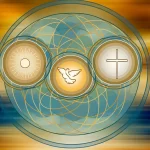
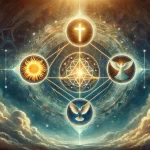
The term Ontological Trinity refers to the eternal being of God in Himself, independent of creation and redemption. It describes the one divine essence subsisting eternally in three distinct persons: Father, Son, and Holy Spirit. The word ontological derives from ontology, the study of being. When applied to the doctrine of the Trinity, it concerns what God is in His eternal nature rather than how He acts in history. The Ontological Trinity therefore focuses on the internal life of God, the equality of the divine persons, and their shared essence.
Eternal Unity of Essence
Scripture affirms that there is one God, Deuteronomy 6:4. At the same time, the Father is called God, 1 Corinthians 8:6; the Son is called God, John 1:1; Hebrews 1:8; and the Holy Spirit is identified with God, Acts 5:3 to 4. The Ontological Trinity maintains that these three persons are not three gods but one in essence. The divine nature is indivisible, infinite, eternal, and unchangeable. Each person fully possesses the whole divine essence, not one third of it. The unity confessed in biblical monotheism is therefore not compromised by personal distinction.
Personal Distinction Without Division
The Father is not the Son. The Son is not the Spirit. The Spirit is not the Father. These distinctions are eternal and not temporary roles adopted in redemptive history. The Son is eternally begotten of the Father, John 1:18, and the Spirit eternally proceeds from the Father and the Son, John 15:26. These relational distinctions do not imply inequality or subordination of essence. Within the Ontological Trinity there is no hierarchy of deity. The Father, Son, and Holy Spirit are coequal and coeternal, sharing the same divine attributes, including omnipotence, omniscience, holiness, and glory.
Distinction from the Economic Trinity
The Ontological Trinity must be distinguished from the Economic Trinity. The latter refers to how God reveals Himself in the work of creation and redemption. In the economy of salvation, the Father sends the Son, John 3:16; the Son accomplishes redemption, Philippians 2:5 to 11; and the Spirit applies redemption, John 3:5 to 8. These ordered roles do not reflect differences in divine nature but differences in function within redemptive history. The Ontological Trinity affirms that before creation and apart from redemption, God eternally exists as Father, Son, and Holy Spirit in perfect unity and communion.
Theological Boundaries and Doctrinal Summary
The doctrine rejects tritheism, which divides the divine essence into three separate beings. It also rejects modalism, which denies real personal distinctions and reduces the Trinity to successive manifestations. The Ontological Trinity safeguards both divine unity and real personal distinction. It confesses that God is one in essence and three in person, eternally and immutably so. In summary, the Ontological Trinity is the doctrine that the one true and living God exists eternally as Father, Son, and Holy Spirit, equal in power and glory, sharing one indivisible divine nature, and existing in perfect eternal communion.