
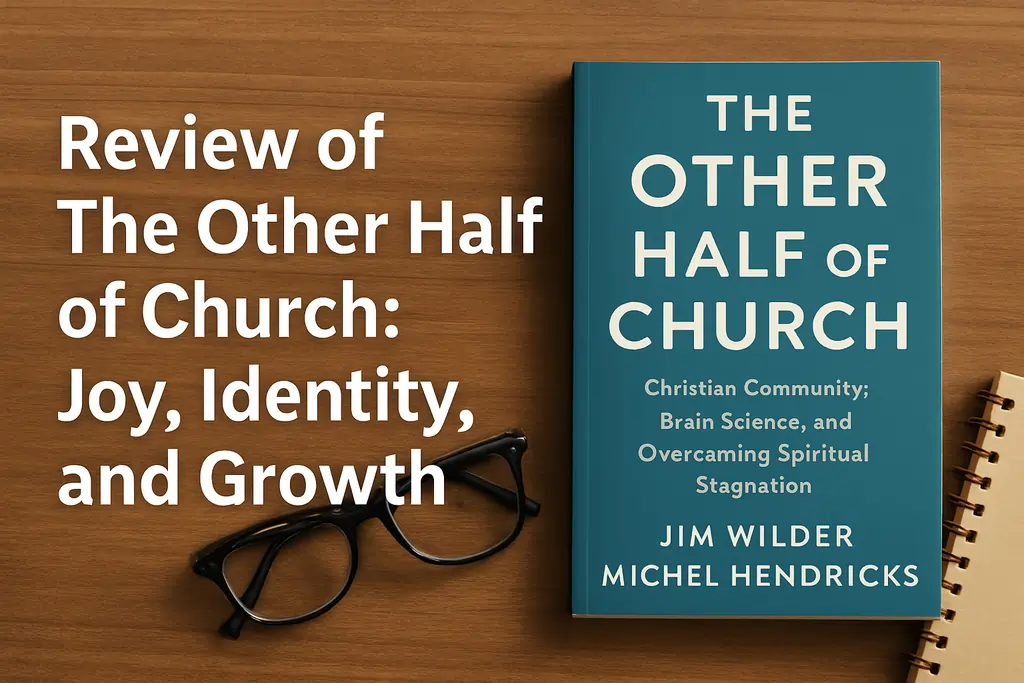
This review of The Other Half of Church examines how joy, (Hesed: Hebrew: חֶסֶד) attachment, and relational identity shape Christian discipleship. The book presents a framework that explains why many believers know Christian truths yet still struggle with spiritual stagnation. It argues that spiritual maturity requires both understanding and relational transformation within Christian community.
Key Thesis
Jim Wilder and Michel Hendricks argue that many churches rely too heavily on left brain discipleship that emphasizes doctrine, logic, and information. While these elements matter, they cannot produce lasting transformation by themselves. The authors propose full brained Christianity, where both hemispheres of the brain are engaged so that believers grow in knowledge, identity, emotion, and relational strength.
Why Spiritual Stagnation Often Happens
Spiritual stagnation occurs when discipleship focuses mainly on teaching, programs, or strategy. People may learn correct doctrine yet fail to internalize transformation. This imbalance produces shallow faith, emotional fatigue, and relational disconnection. Believers know what they should believe but struggle to become the kind of people Scripture describes. According to the authors, discipleship that does not address relational and emotional formation leaves the church vulnerable to burnout and weak community bonds.
What the Right Brain Contributes to Discipleship
1. Emotional Connection and Joy
Joy is described as the feeling that someone is glad to be with you. It strengthens the brain and stabilizes relationships. Communities shaped by joy nurture resilience, trust, and warmth. Joy becomes a central pathway for spiritual growth.
2. Secure Relational Attachment (Hesed: Hebrew: חֶסֶד)
Hesed refers to steadfast, covenant love. The authors link this biblical idea with secure attachment that creates emotional safety and belonging. Believers grow when they are rooted in trustworthy relationships marked by loyalty, presence, and mutual support.
3. Group Identity Shaped Around Christlikeness
Identity forms most powerfully within community. Spiritually healthy churches cultivate a shared understanding of who we are as followers of Jesus. Members grow by living out values shaped by Christ rather than by individual preference.
4. Healthy Correction and Accountability
Correction in community should restore rather than shame. Gentle, relational guidance helps believers return to their true identity in Christ. Healthy accountability strengthens unity and builds character.
What a Full Brained Christian Community Looks Like
A full brained community values relational health as highly as doctrinal clarity. Leaders guide through presence, humility, and emotional maturity. Small groups and intergenerational connections become central spaces for growth. Discipleship focuses on character formation, shared identity, and relational transformation rather than performance or programs. Such communities cultivate joy, belonging, and long term commitment.
Practical Implications and Critique
The authors encourage churches to design worship, discipleship, and fellowship in ways that support both rational understanding and relational emotional growth. Practices may include grief support, intentional fellowship, mentoring, and communal identity formation. Many readers appreciate the accessible blend of theology and neuroscience. Others note that the book offers limited step by step guidance, making implementation challenging for leaders who want more concrete directions.
Five Major Strengths
1. Integrates theology and brain science effectively
The authors present neuroscience and discipleship in a clear format that helps readers understand why relational bonds matter for spiritual maturity.
2. Emphasizes relational discipleship
Transformation is portrayed as relational, reflecting joy, attachment, and shared identity. This model aligns with the relational patterns of Jesus and the early church.
3. Focus on emotional and relational health
By highlighting joy and attachment, the book offers tools for building emotionally healthy communities capable of long term strength.
4. Addresses a real problem in modern Christianity
Many churches emphasize teaching while overlooking relational maturity. The authors identify this imbalance as a root cause of spiritual stagnation.
5. Accessible writing and relatable stories
The book explains complex concepts in simple language, making it useful for pastors, leaders, and lay readers.
Five Major Weaknesses
1. Limited theological depth
Readers seeking extensive biblical exposition may find the treatment of Scripture too light.
2. Vague implementation guidance
The framework is strong, but the book provides few detailed steps for real world ministry settings.
3. Overreliance on brain science language
Some readers may find the neuroscience emphasis technical or speculative.
4. Limited attention to sin and spiritual warfare
The focus on emotional healing can overshadow themes such as repentance and spiritual conflict.
5. Primarily Western framework
The ideas draw from Western research and may not translate easily into non Western cultural settings.
Conclusion
The book offers a thoughtful model of discipleship that unites rational understanding with relational formation. It helps readers understand why many Christians know truth but remain spiritually stuck. By highlighting joy, (Hesed: Hebrew: חֶסֶד) attachment, and group identity, the authors present a hopeful path toward deeper transformation. The message encourages churches to form communities that shape believers through relationships marked by loyalty, presence, and shared life in Christ.
Call to Action
The https://nacministers.com/ to learn more or begin your membership journey.
References
Wilder, J., and Hendricks, M. (2020). The other half of church: Christian community, brain science, and overcoming spiritual stagnation. Moody Publishers.